

Last Updated: October 27, 2026
Quick Summary
Start with half a serving of cordyceps coffee, then work up, because most blends provide around 250 mg of mushroom per serving while lion's mane trials used 1,000 to 3,000 mg per day. Check the supplement facts panel for per-ingredient amounts, since a 1,000 mg blend total is not your lion's mane or cordyceps dose.
- A published lion's mane trial used 3 g daily for 16 weeks in adults ages 50 to 80.
- A cordyceps militaris exercise study used 1.3 g three times daily, totaling 4 g per day.
- A 10:1 extract means 500 mg represents roughly 5,000 mg of raw mushroom material.
- Stop cordyceps at least two weeks before a scheduled procedure unless your surgeon says otherwise.
- Federal health agencies commonly cite about 400 mg of caffeine per day for healthy adults.
Table of Contents
- How Much Mushroom Coffee Per Day Should You Actually Drink
- Lion's Mane Dosage: What the Research Actually Used
- Cordyceps Dosage: Matching Study Amounts to Your Cup
- How to Calculate Doses From a Coffee Blend Label
- Pairing Lion's Mane and Cordyceps With Caffeine
- Mushroom Coffee Side Effects and Safety Considerations
- Timing, Gradual Introduction, and Tracking Your Response
- Building Your Daily Cup With IronRise Coffee
- Frequently Asked Questions
How Much Mushroom Coffee Per Day Should You Actually Drink
Most cordyceps coffee labels list a serving size but not whether it matches the amounts used in research. That gap matters when you're figuring out lion's mane cordyceps coffee doses, and it's why we wrote this guide at IronRise Coffee.
Here's the short answer: start with half a serving, then work up. A typical cup delivers far less mushroom material than clinical trials used. A review of the research notes that lion's mane trials used 1,000 to 3,000 mg per day, while most mushroom coffees provide around 250 mg per serving (review of mushroom coffee dosing versus clinical trials). That's a real gap, not a rounding error.
So the question isn't "how much coffee should I drink" but "how much lion's mane and cordyceps am I actually getting, and does it line up with anything studied?"
Start With a Half Serving
Keep in mind that more coffee doesn't automatically mean more mushrooms. If your blend packs 250 mg per serving, a second cup doubles your caffeine too.
Lion's Mane Dosage: What the Research Actually Used
The most-cited lion's mane amount in human research is 3 grams per day. A published trial used 3 g daily for 16 weeks in adults ages 50 to 80 with mild cognitive impairment (lion's mane human trial, 3 g daily for 16 weeks).
Reading the Label: Milligrams Per Serving vs. Per Day
Labels mix up "per serving" and "per day," which are not the same thing. Check for these three numbers:
- Mushroom mg per serving, the amount in one scoop or packet
- Servings per container, tells you total mushroom material in the bag
- Mushroom mg per day, what you actually get at your daily intake
If a label says 500 mg of total mushroom powder per serving, that's the combined weight of everything, not lion's mane alone. You can check the lion's mane mushroom ingredient details to see what the brand's own product contains. A big "1,000 mg" on the front can refer to the whole blend, so read the supplement facts panel, not the marketing.
Cordyceps Dosage: Matching Study Amounts to Your Cup
Cordyceps research doses run higher than most people expect. You can review the cordyceps mushroom ingredient page to see what's actually in the blend you're dosing. A cordyceps militaris exercise study had participants take 1.3 g three times daily, totaling 4 g per day (cordyceps militaris exercise study, 4 g daily).
How to Calculate Doses From a Coffee Blend Label
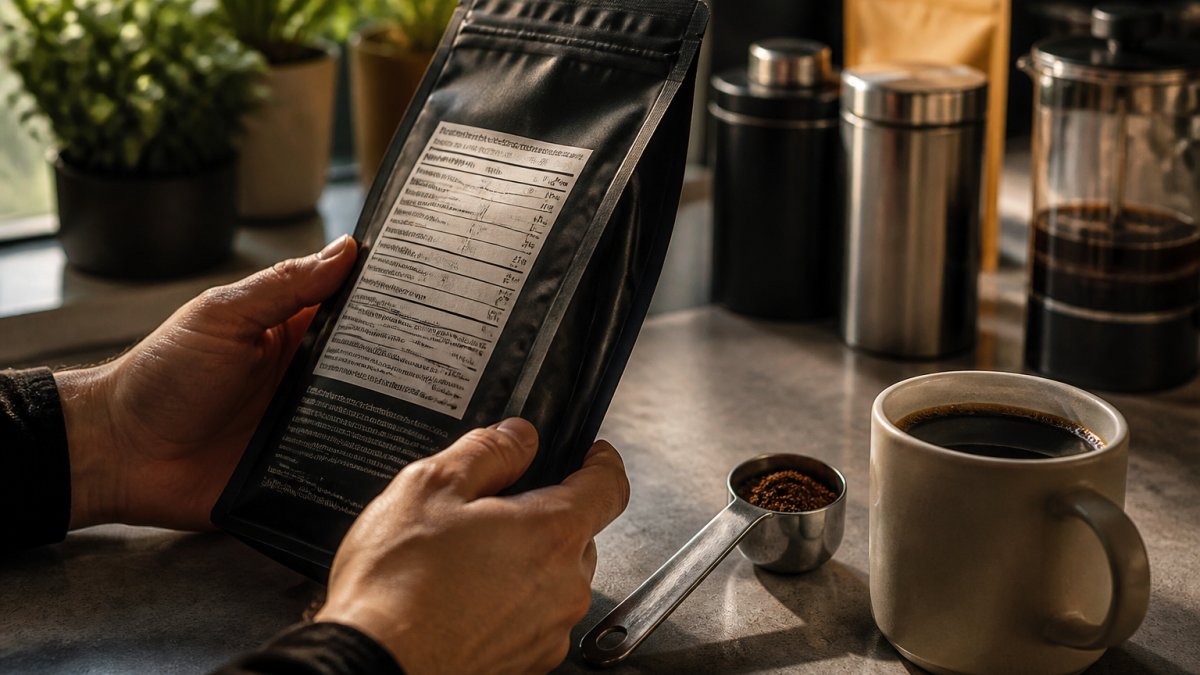
Here is the trap: a label that says "1,000 mg mushroom blend" is telling you the combined weight of every mushroom in the scoop, not how much lion's mane or cordyceps you get. A blend with 600 mg lion's mane, 300 mg cordyceps, and 100 mg reishi still adds up to 1,000 mg, but your lion's mane dose is 600 mg, not 1,000 mg. Always read the supplement facts panel, where each ingredient is listed separately with its own milligram amount. For practical help turning those numbers into an actual scoop, see how to measure coffee grounds perfectly every time for a better brew.
Step 1: Find the Per-Ingredient Amounts
Check the bag or the IronRise website for the per-ingredient dosage information. IronRise's bag does not list the per-ingredient milligram amounts, but you can find them on the IronRise website: Lion's Mane 300 mg Extract (4:1) and Cordyceps 150 mg (8:1). The ratio in parentheses tells you how concentrated the extract is: a 4:1 extract means it took 4 grams of raw mushroom to produce 1 gram of extract, and an 8:1 extract means it took 8 grams of raw mushroom to produce 1 gram of extract. So the 300 mg lion's mane extract represents roughly 1,200 mg of raw mushroom material, and the 150 mg cordyceps extract also represents roughly 1,200 mg of raw material. That is a real limitation of the bag itself, and it is worth knowing where to look instead.
Step 2: Check Whether the Number Is Powder or Extract
This is where most dose math goes wrong: raw powder and concentrated extract are not the same at the same milligram weight. A 10:1 lion's mane extract means 10 grams of raw mushroom made 1 gram of extract, so 500 mg of a 10:1 extract represents roughly 5,000 mg of raw material, while 500 mg of plain powder is 500 mg. A trial that used 3,000 mg of powder is not the same as 3,000 mg of concentrated extract. If your bag lists an extract ratio, use it to translate; if not, assume powder weight and treat the number conservatively.
30 Servings of Viking Brew Creatine Coffee →
Step 3: Look for Standardization
Standardization means the extract is tested to contain a set amount of a marker compound, such as beta-glucans for lion's mane or cordycepin for cordyceps. A label that says "standardized to 25% beta-glucan" tells you more than a raw weight, because two products can both say 500 mg and deliver very different amounts of the compounds researchers study.
Step 4: Multiply by Your Daily Cups
| Label Says | Per Cup | 1 Cup/Day | 2 Cups/Day | 3 Cups/Day |
|---|---|---|---|---|
| 250 mg lion's mane | 250 mg | 250 mg | 500 mg | 750 mg |
| 300 mg lion's mane + 100 mg cordyceps | 400 mg total | 400 mg | 800 mg | 1,200 mg |
| 500 mg total mushroom powder (blend, no breakdown) | 500 mg | 500 mg | 1,000 mg | 1,500 mg |
Our 1 tablespoon steel coffee scoop.

Pairing Lion's Mane and Cordyceps With Caffeine
Our Viking Brew combines 100% Arabica coffee, 2.5 g of creatine monohydrate, Lion's Mane, Cordyceps, and L-Theanine.

Mushroom Coffee Side Effects and Safety Considerations
Most people tolerate mushroom coffee well, but the safety picture changes when you combine two mushrooms with caffeine in one cup. Here's what to watch for and when to check with a clinician.
Common Side Effects and What Causes Them
- Digestive upset, bloating, gas, or loose stools. The most common complaint, usually from starting at a full serving instead of a half, or from the coffee itself if you're sensitive to caffeine or acids.
- Headaches, most often caffeine-related. Replacing regular coffee with a lower-caffeine mushroom coffee can cause a mild withdrawal headache in the first few days.
- Sleep disruption, from caffeine consumed too late in the day. The mushrooms aren't stimulants, but the coffee carrying them is.
- Mild drowsiness or calm, which some people notice with lion's mane. If you feel foggy after a cup, try a smaller serving.
- Jitteriness or a racing feeling, usually from total caffeine load, especially if you stack mushroom coffee on other caffeinated drinks.
Medication and Condition Considerations
- Blood thinners and clotting. Cordyceps may affect platelet function and blood clotting. If you take warfarin, apixaban, rivaroxaban, clopidogrel, aspirin for heart protection, or any other anticoagulant or antiplatelet medication, check with your prescriber before adding cordyceps.
- Immune-related medications. Lion's mane can stimulate immune activity. If you take immunosuppressants after a transplant or for an autoimmune condition, ask your clinician before adding it.
- Blood sugar medications. Cordyceps may influence blood glucose in some people. If you take insulin or a sulfonylurea, monitor your levels and discuss the addition with your care team.
- Blood pressure medications. Cordyceps can affect blood pressure. If you are on antihypertensives, a check-in with your pharmacist is reasonable.
- Pregnancy and nursing. There is not enough human safety data on either mushroom at supplement doses during pregnancy or breastfeeding. The cautious move is to skip mushroom coffee or get explicit clearance from your obstetric clinician.
- Surgery. Because of the potential clotting effect, stop cordyceps at least two weeks before a scheduled procedure unless your surgeon says otherwise.
- Allergies. If you react to mold, yeast, or other fungi, start with a very small amount and watch for a reaction.
Caffeine Is Part of the Safety Math
A cup of mushroom coffee still contains caffeine unless it's explicitly decaf, so count it toward your daily total; a second cup doubles both the mushroom material and the caffeine. Federal health agencies commonly cite about 400 mg of caffeine per day as general guidance for healthy adults, and many clinicians advise about 200 mg during pregnancy. Check the caffeine content on your bag rather than guessing, because blends vary widely.
When to Stop and Call a Clinician
None of this is meant to scare you off, just to make the decision an informed one when two functional mushrooms and caffeine land in the same scoop.
Timing, Gradual Introduction, and Tracking Your Response
A gradual transition helps too. If you're coming from regular coffee, swap one cup at a time rather than going cold turkey. That keeps caffeine withdrawal out of the picture and makes it easier to judge what the mushrooms are doing.
Building Your Daily Cup With IronRise Coffee
Viking Brew combines 100% Arabica coffee with 2.5 g creatine monohydrate, Lion's Mane, Cordyceps, and L-Theanine. It has no added sugar and is made in the USA.
Frequently Asked Questions
How much lion's mane and cordyceps should I take in coffee each day?
There is no official daily dose for either mushroom in coffee. Research on lion's mane has used 1,000 to 3,000 mg per day, and a cordyceps militaris exercise study used 4 g per day. Most mushroom coffees deliver around 250 mg per serving, so check your bag's ingredient panel and compare the stated milligrams to those study amounts before assuming one cup matches the research.
Should I start with a half serving of mushroom coffee?
Starting with half a serving is a sensible way to check tolerance, especially if you are new to functional mushrooms or sensitive to caffeine. Drink half a cup for the first week, note how you feel, then move to a full serving. This also helps you separate the effect of the mushrooms from the caffeine in your regular coffee.
What are the downsides of mushroom coffee?
The main issues are dose and caffeine. Many products contain far less mushroom extract than clinical trials used, so benefits may be modest. Coffee still contains caffeine, which can cause jitters or disrupt sleep if you drink it late. Some people report digestive discomfort when starting mushroom powders, which is why a gradual introduction helps.
Can you drink lion's mane and cordyceps coffee every day?
Daily use is common, but check with your doctor first if you take medication, are pregnant, or have a health condition. Lion's mane may affect blood clotting, and cordyceps can interact with blood thinners and immune-suppressing drugs. Keep a simple log of how you feel for the first few weeks so you can spot any changes and adjust your serving size.
The hardest part of lion's mane cordyceps coffee doses isn't the math. It's being honest about what a cup delivers versus what research used, then building a routine you'll actually keep. That's where we can help. IronRise Coffee gives you coffee, lion's mane, cordyceps, L-theanine, and 2.5 g of creatine in one measured scoop, with no separate powders to mix. Get started with IronRise Coffee and build a morning cup you can measure, track, and repeat.

0 comments