

Table of Contents
- Lion's Mane and Cordyceps Benefits: What the Evidence Actually Shows
- Can You Mix Lion's Mane and Cordyceps? What the Research Says
- Lion's Mane vs. Cordyceps: How the Two Mushrooms Differ
- Cordyceps Benefits: Energy, Stamina, and Oxygen Use
- Lion's Mane, Cordyceps, and Cognitive Function: Focus, Memory, and NGF
- Dosing, Timing, and Product Quality: How to Take Both Mushrooms
- Lion's Mane and Cordyceps Side Effects: Safety and Interactions
- Conclusion: Realistic Expectations for Lion's Mane and Cordyceps
- Frequently Asked Questions
Last Updated: October 14, 2026
Lion's Mane and Cordyceps Benefits: What the Evidence Actually Shows
Lion's mane and cordyceps benefits come down to two different jobs: lion's mane is studied mainly for nerve and cognitive support, while cordyceps is studied mainly for energy and oxygen use. Both are functional mushrooms, and both have real laboratory research behind them, but the human clinical evidence is thinner than marketing suggests.
Here's the honest version most guides skip: the strongest lion's mane data comes from small human trials and lab work on nerve growth factor, and the strongest cordyceps data comes from exercise studies using concentrated extracts, not grocery-store powder. At IronRise Coffee, we built our blend around that distinction, pairing 2.5g of creatine monohydrate with Lion's Mane and Cordyceps.
What follows is a plain breakdown of what each mushroom does, whether you can take them together, how to dose them, and who should be careful.
Can You Mix Lion's Mane and Cordyceps? What the Research Says
Yes, you can mix lion's mane and cordyceps, and there is no known mechanism by which they conflict. Both are edible mushrooms with long culinary histories, neither is a stimulant, and their primary proposed pathways, nerve growth factor signaling for lion's mane, mitochondrial and oxygen-use support for cordyceps, operate on different systems. Combining them does not create an overload effect the way stacking two stimulants would.
The honest caveat is that almost no published human trial tests the pair together as a fixed combination. That matters, because it means every claim about "synergy" is an inference, not a finding. Here is how to read the evidence correctly:
- Individual-ingredient evidence. Lion's mane has small human trials and lab work on NGF-related compounds. Cordyceps has exercise trials using concentrated extracts. These are separate evidence bases.
- Combination evidence. Essentially none in humans. No large randomized trial has isolated the pair and measured a combined outcome.
- Mechanistic reasoning. The pathways don't obviously interfere, which is why co-use is considered reasonable, but "no known conflict" is not the same as "proven to work better together."
A useful way to think about it: if you took each mushroom alone and got a modest effect, stacking them should give you the sum of those modest effects, not a multiplied one. Anyone promising a synergistic leap is selling, not citing.
Lion's Mane vs. Cordyceps: How the Two Mushrooms Differ
The core difference is target: lion's mane is a cognitive and nerve-support mushroom, while cordyceps is a performance and energy mushroom. Confusing the two is the most common mistake we see.
| Factor | Lion's Mane | Cordyceps |
|---|---|---|
| Primary focus | Brain health, focus, memory | Energy, stamina, oxygen use |
| Key compounds | Hericenones, erinacines | Cordycepin, cordycepic acid |
| Research strength | Lab studies plus small human trials | Exercise trials with extracts |
| Best taken | Morning or early afternoon | Before activity |
| Typical form | Extract powder or capsule | Extract powder or capsule |
Lion's mane gets its reputation from compounds that appear to support nerve growth factor, a protein involved in nerve cell maintenance. Cordyceps gets its reputation from studies on ATP production and oxygen use during exercise. Different systems, different outcomes.
Cordyceps Benefits: Energy, Stamina, and Oxygen Use
Cordyceps benefits center on energy metabolism, and the most cited mechanism involves ATP, the molecule your cells use as their primary energy currency. Laboratory and animal studies suggest cordycepin may support mitochondrial function and more efficient oxygen use.
The human picture is narrower. Exercise studies generally use concentrated cordyceps extracts, and results vary by dose, extract quality, and training status.
NIH National Center for Complementary and Integrative Health overview of mushroom supplements
Lion's Mane, Cordyceps, and Cognitive Function: Focus, Memory, and NGF
Lion's mane is the cognitive half of the pair. Its hericenones and erinacines are the compounds most studied for supporting nerve growth factor, or NGF, a protein tied to the growth and maintenance of nerve cells.
That's a proposed mechanism, not a proven outcome. Small human studies in older adults have looked at cognition and mood, and lab work on nerve regeneration and neuroprotection is genuinely interesting, but the clinical evidence is limited. Anyone promising sharper memory in a week is guessing.
In practice, this means lion's mane is a slow-build ingredient. People who notice something usually describe steadier focus and less mental fatigue rather than a sudden boost. If you want an immediate effect, caffeine and L-theanine do that job; lion's mane is the long game.
Dosing, Timing, and Product Quality: How to Take Both Mushrooms
Dosing both mushrooms well comes down to four things: extract type, actual quantity, testing transparency, and timing. Most products fail on at least one, and the label rarely tells you which.
1. Fruiting body vs. mycelium. Lion's mane and cordyceps supplements are sold as either fruiting-body extract or mycelium grown on grain. Fruiting-body extracts are generally preferred because they concentrate the compounds studied in research, hericenones and erinacines in lion's mane, cordycepin in cordyceps. Mycelium-on-grain products often contain a large share of starch from the grain itself, which dilutes the active content. If the label says "mycelium" or "biomass" without a fruiting-body claim, assume filler.
2. Beta-glucan disclosure. Beta-glucans are a marker of actual fungal content. Quality brands state a beta-glucan percentage on the label. A product that lists "mushroom blend" with no beta-glucan figure is giving you no way to verify how much fungus is actually in the capsule.
3. Testing and contamination. Mushrooms are grown in soil and can concentrate heavy metals, and imported powders have been flagged for contamination. Look for third-party testing language, heavy metals, microbials, and identity confirmation. A certificate of analysis available on request is a good sign; silence is not.
30 Servings of Viking Brew Creatine Coffee →
4. Evidence-aware dosing. There is no universal dose. Human studies have used a range of extract amounts, and results vary by extract concentration, so a milligram figure from one study does not transfer cleanly to a different product.
5. Timing. Cordyceps fits before activity, since the exercise research centers on oxygen use and stamina during exertion. Lion's mane fits morning or early afternoon, since it's a slow-build cognitive ingredient rather than a stimulant. Taking lion's mane late in the day is unlikely to keep you awake, but there's no benefit to pushing it past your active hours.
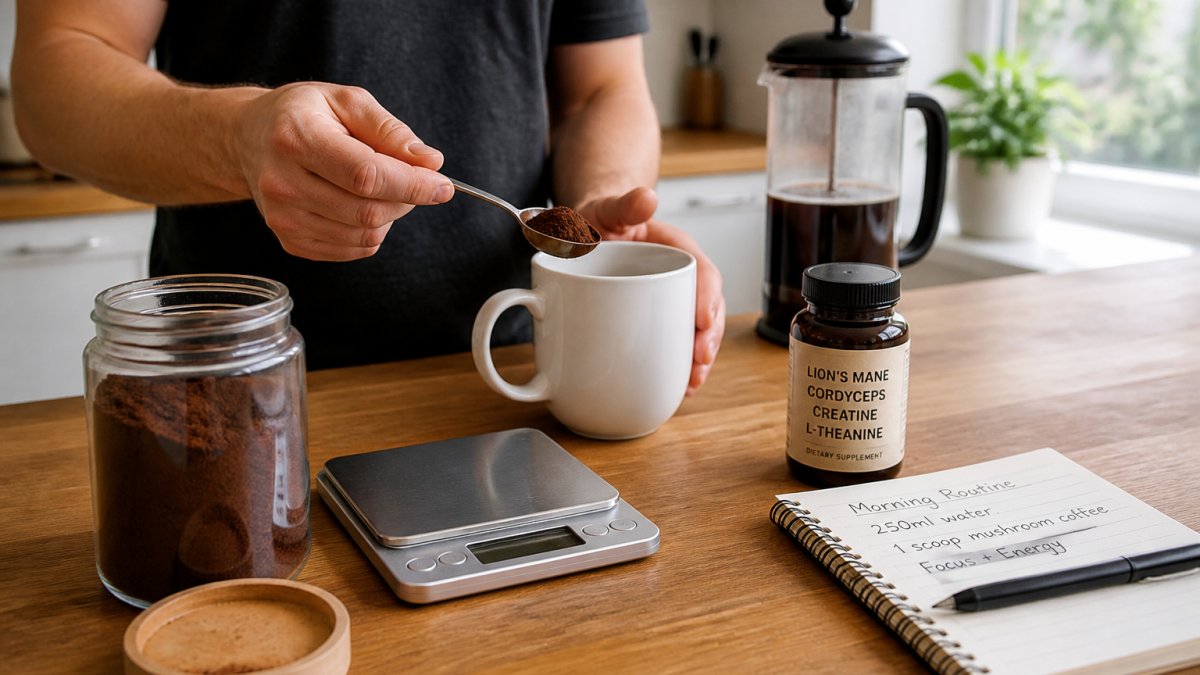
This is where we made a deliberate choice with Viking Brew. We combined 100% Arabica coffee, 2.5g of creatine monohydrate, Lion's Mane, Cordyceps, and L-theanine in one scoop, with no added sugar. You can see the full breakdown on [our 30 Servings of Viking Brew Creatine Coffee page](/products/viking-brew-starter-kit).

FDA guidance on dietary supplement labeling and claims
Lion's Mane and Cordyceps Side Effects: Safety and Interactions
Lion's mane and cordyceps side effects are usually mild: digestive upset, headache, or a skin reaction in sensitive people. Both have long culinary use, and serious reactions are uncommon in the published literature.
The bigger issue is interactions, not the mushrooms themselves.
- Blood thinners and antiplatelet drugs.
- Diabetes medication.
- Immunosuppressants.
- Pregnancy, nursing, and upcoming surgery. Skip both unless a clinician clears them.
- Autoimmune conditions. Treat mushroom supplements cautiously and get medical advice.
If you take prescription medication, talk to your doctor or pharmacist.
FDA guidance on dietary supplement labeling and claims
Conclusion: Realistic Expectations for Lion's Mane and Cordyceps
The honest summary of lion's mane and cordyceps benefits: real mechanisms, promising early research, and human evidence that's still catching up. Expect gradual changes in focus and endurance, not a transformation.
If you want the stack without juggling three jars, our Viking Brew combines 100% Arabica coffee, 2.5g of creatine monohydrate, Lion's Mane, Cordyceps, and L-theanine in one scoop, with no added sugar and no jitters.
Frequently Asked Questions
What are the benefits of taking lion's mane and cordyceps together?
The pairing combines lion's mane's cognitive and nerve-support research with cordyceps' energy and oxygen-utilization research. Most evidence comes from separate studies of each mushroom, not from trials of the combination itself. A daily coffee that includes both, like Viking Brew, is one way to make the habit consistent.
Can you mix lion's mane and cordyceps in the same drink?
Yes. There is no known interaction that makes mixing them unsafe for healthy adults, and many mushroom coffees and capsules combine them deliberately. Start with one serving daily and note how you feel over two to four weeks. If you take prescription medication or have an autoimmune condition, talk to your doctor first.
What is better, cordyceps or lion's mane?
Neither is universally better; they target different goals. Choose lion's mane if your priority is focus, memory, or nerve health. Choose cordyceps if you want stamina or exercise performance. If you want both, stacking them is common and generally well tolerated.
What are the side effects of lion's mane and cordyceps?
Allergic reactions are possible if you react to other mushrooms. If you notice anything unusual, check with a clinician. People on immunosuppressants or with autoimmune conditions should avoid both without medical clearance.
How should you take lion's mane and cordyceps for the best results?
Take them consistently, ideally in the morning. Look for products that state extract ratio, beta-glucan content, and third-party testing.
Is it safe to drink mushroom coffee with lion's mane and cordyceps every day?
Watch your caffeine total if the product also contains coffee.
Most people quit on functional mushrooms because they never took a real dose. IronRise Coffee solves that with Viking Brew: 100% Arabica coffee, 2.5g of creatine monohydrate, Lion's Mane, Cordyceps, and L-theanine in a single morning scoop, made in the USA with no added sugar. Get started with IronRise Coffee and make your first cup do more than wake you up.
0 comments