

Table of Contents
- Does Mushroom Coffee Taste Earthy? The Short Answer
- What Does Mushroom Coffee Taste Like?
- Why Mushroom Coffee Tastes Earthy: Ingredients, Roast, and Ratios
- Side-by-Side Taste Comparison by Mushroom Variety and Blend
- The Earthy-Flavor Scale: Rating Grittiness, Bitterness, and Aftertaste
- How to Make Mushroom Coffee Taste Better
- Best Mushroom Coffee for Taste: What to Look For on the Label
- Dietary and Allergen Considerations for Add-Ins
- Frequently Asked Questions
Last Updated: October 21, 2026
Does Mushroom Coffee Taste Earthy? The Short Answer
Yes, mushroom coffee taste is earthy, but usually less than people expect. The earthy flavor in most blends comes from the mushrooms, not the coffee beans.
Most people who dislike mushroom coffee are reacting to a poorly made cup, not the concept. A well-built blend hides the earthiness behind roasted flavor.
Below, we break down exactly what drives that earthy taste and how to control it.
What Does Mushroom Coffee Taste Like?
Mushroom coffee tastes like regular coffee with a subtle earthy note underneath. The coffee beans still lead.
What most guides miss is how much the mushroom type matters. Lion's mane tends to taste mild and slightly sweet.
The texture matters too. Fine mushroom powder blends smoothly. Coarse powder leaves grittiness at the bottom of the cup, which many people mistake for a flavor problem.
Why Mushroom Coffee Tastes Earthy: Ingredients, Roast, and Ratios
The earthy note comes from three places: the mushroom variety, the coffee beans and roast level, and the coffee-to-mushroom ratio. Change any one of those and the cup tastes different.
Mushroom Variety and Flavor
Each functional mushroom carries its own flavor profile. Lion's mane is the mildest and easiest to mask. Reishi is the boldest, with a bitter, dirt-like edge that survives most blends. Cordyceps adds a woody, slightly savory note.
A common mistake is buying a reishi-heavy blend as a first mushroom coffee. Start with lion's mane if you want the gentlest earthy flavor.
Coffee Beans, Roast, and Bitterness
Darker roasts hide earthiness better than light roasts. The roasted flavor and bitterness from a dark roast push the mushroom note into the background. Arabica beans generally taste smoother and less bitter than Robusta, which helps balance the taste.
Grinding fresh also helps. Pre-ground coffee loses aroma fast, and without that aroma, the earthy note stands out more.
Coffee-to-Mushroom Ratio and Powder Texture
The ratio decides everything. A blend with a small amount of mushroom powder tastes mostly like coffee. A blend loaded with extract tastes like mushroom first and coffee second.
Extract powder dissolves more cleanly than raw mushroom powder. Raw powder is where grittiness comes from. If your cup feels chalky, the powder is too coarse or the dose is too high.
Side-by-Side Taste Comparison by Mushroom Variety and Blend
A table alone does not tell you what to expect in the cup. The comparison below uses a consistent tasting framework so you can line up any two bags on the same four axes: earthy intensity, bitterness, texture, and aftertaste. Rate each axis from 1 (barely there) to 5 (overpowering), the same scale used later in this guide.
| Mushroom | Earthy Intensity | Bitterness | Texture | Aftertaste | Flavor Notes | Best For |
|---|---|---|---|---|---|---|
| Lion's mane | 2 | 1-2 | Smooth | Clean, short | Mild, slightly sweet, almost creamy | First-time buyers |
| Cordyceps | 3 | 2-3 | Slightly grainy | Woody, medium | Savory, woody, faintly umami | Daily drinkers |
| Reishi | 4-5 | 4-5 | Can be chalky | Long, bitter, dirt-like | Bitter, earthy, medicinal | Bold-flavor fans |
| Chaga | 3-4 | 3 | Smooth when extracted | Malty, medium | Dark, roasted, molasses-like | Dark-roast fans |
| Turkey tail | 3 | 2-3 | Slightly grainy | Mild, earthy | Mildly bitter, faintly woody | Blends with other varieties |
| Multi-mushroom blend | 2-4 | 2-4 | Varies by powder | Varies | Balanced, coffee-forward if coffee leads | Most people |
Why the Varieties Taste Different
The flavor differences track the mushroom's natural chemistry. Reishi carries more bitter compounds and a denser, woodier structure, which is why its earthiness survives roasting and blending. Lion's mane is softer and slightly sweet, so it disappears behind coffee more easily. Cordyceps and chaga sit in the middle, with cordyceps leaning savory and chaga leaning roasted and malty.
Comparing Blends on the Same Framework
When you compare two bags, score each one on the four axes above and write the scores down. A blend that scores 2-2-1-2 (earthy, bitter, texture, aftertaste) will taste mostly like coffee.
A common pattern is that blends listing coffee first score lower on earthy intensity and bitterness, while blends listing mushroom extract first score higher on both.
Lion's mane wins for beginners because it scores low on every axis. Reishi is the variety that gives mushroom coffee its bad reputation, and it is also the one people either love or hate. Multi-mushroom blends land in the middle because the coffee usually carries more weight than any single mushroom.
The Earthy-Flavor Scale: Rating Grittiness, Bitterness, and Aftertaste
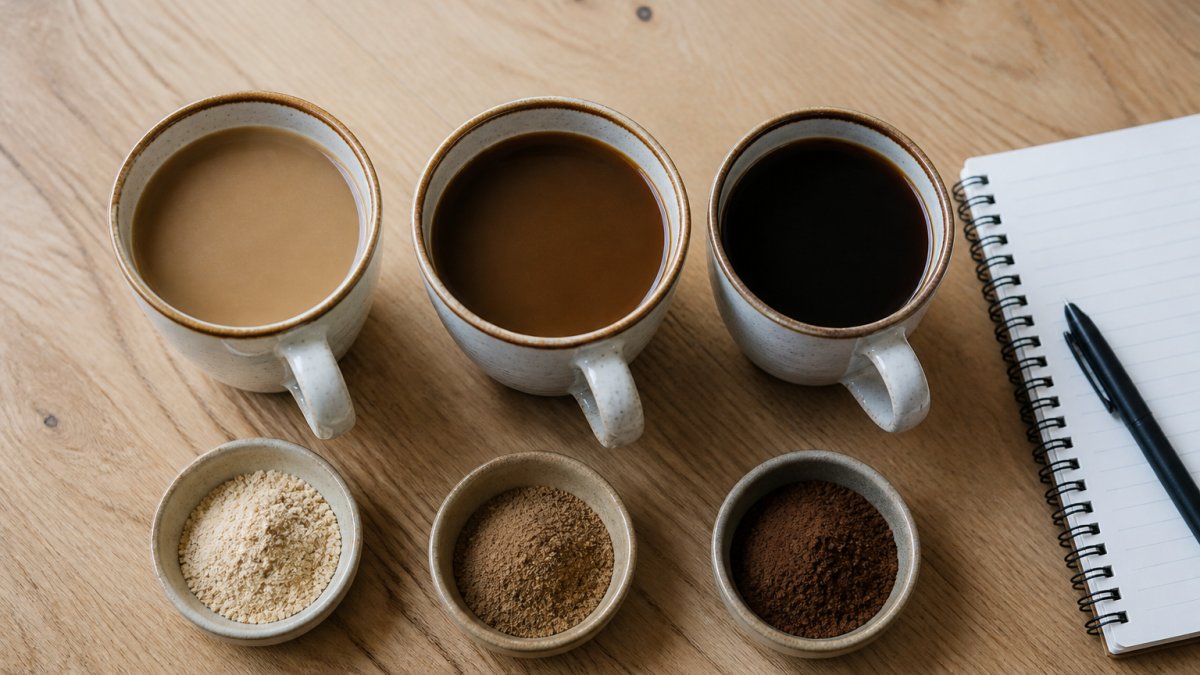
Use a simple 1-to-5 scale to judge any cup before you buy a second bag:
30 Servings of Viking Brew Creatine Coffee →
- 1 - Barely there: Tastes like normal coffee, faint earthy aroma
- 2 - Subtle: Noticeable earthy note, smooth texture, clean aftertaste
- 3 - Balanced: Clear mushroom flavor, still coffee-forward, mild bitterness
- 4 - Strong: Mushroom leads, noticeable grittiness, lingering earthy aftertaste
Most people who enjoy mushroom coffee land at a 2 or 3. If a cup hits a 4 or 5, the ratio is off or the powder is too coarse.
How to Make Mushroom Coffee Taste Better
You can fix an earthy cup without switching brands. Small changes to brewing and add-ins make a real difference.
- Use hotter water: Water just off the boil dissolves the powder better and cuts grittiness
- Whisk, don't stir: A small whisk or frother breaks up clumps
- Add milk or cream: Dairy or oat milk rounds off bitter notes
- Try a sweetener: A little sugar or honey balances earthiness
- Add spices: Cinnamon, cocoa, or cardamom mask the dirt-like taste well
A controlled taste test helps too. Brew two cups, one with your normal dose and one with half, and compare. Most people find the smaller dose tastes cleaner and still delivers the functional ingredients.
Best Mushroom Coffee for Taste: What to Look For on the Label
The best mushroom coffee for taste lists coffee first, uses extract powder instead of raw powder, and names the mushroom dose clearly. But the label only helps if you know how to read it. The guidance below turns each line of the ingredient panel into a taste prediction.
Reading the Ingredient Order
Ingredients are listed by weight. If coffee leads the list, the cup will taste mostly like coffee. If mushroom powder or extract appears before the coffee, expect a stronger earthy note. A blend that lists "organic coffee, lion's mane extract" will taste different from one that lists "lion's mane extract, organic coffee" even if the front of the bag looks identical.
Extract Versus Raw Powder
Extract powder is concentrated and dissolves more cleanly, so it adds flavor without much grit. Raw powder is the whole dried mushroom ground up, and it is where chalkiness and sediment come from. A label that says "extract" usually predicts a smoother cup; a label that says "powder" or "ground" predicts more texture and a stronger earthy aftertaste at the same dose.
Named Dose Per Serving
A label that states the mushroom dose per serving (for example, 500 mg or 1 g) lets you compare bags directly. A label that hides the amount behind a proprietary blend makes taste prediction impossible. As a rule of thumb, higher doses of reishi or chaga push the cup toward the strong end of the earthy scale, while the same dose of lion's mane stays mild.
Coffee Type and Roast
Arabica beans generally taste smoother and less bitter than Robusta, which helps balance the mushroom note. Dark roasts hide earthiness better than light roasts because the roasted flavor pushes the mushroom into the background. A label that names the roast level gives you one more lever to predict the cup.
Added Flavorings and Sweeteners
Some blends add cinnamon, cocoa, vanilla, or sweeteners to mask earthiness. Those additions change the taste profile, so read the full ingredient list rather than the front-of-bag claims. A flavored blend may score lower on earthy intensity simply because the flavoring covers it, not because the mushroom dose is lower.
Third-Party Testing
Third-party testing confirms what is actually in the bag, which matters when the label claims a specific mushroom or dose. It does not predict taste directly, but it tells you whether the label you are reading is reliable.
This is where IronRise Coffee takes a different approach. Our Viking Brew combines 100% Arabica coffee with Lion's Mane, Cordyceps, L-Theanine, and 2.5g of creatine monohydrate per serving. No added sugar, and it is made in the USA.

Dietary and Allergen Considerations for Add-Ins
What you add to the cup changes both taste and what your body absorbs. A few things to check:
- Dairy: Milk and cream add calories and may bother lactose-sensitive stomachs; oat and almond milk are common swaps
- Sweeteners: Sugar-free syrups keep it clean; honey and maple add sugar
- Spices: Cinnamon and cocoa are generally safe, but check for added fillers in flavored blends
- Caffeine: Mushroom coffee still contains caffeine from the coffee beans, so check the total before an evening cup
- Creatine: If you already take creatine separately, factor that into your daily total
If you have a mushroom allergy, talk to your doctor before trying any functional mushroom product. Read the full ingredient list on any blend, since some add adaptogens or sweeteners you may not expect.
Frequently Asked Questions
Does mushroom coffee taste earthy?
Yes, mushroom coffee often has an earthy taste, but the strength varies widely. The earthiness comes from the mushroom powder itself, especially varieties like reishi and cordyceps, plus the coffee-to-mushroom ratio. Blends with more Arabica coffee and less mushroom powder taste closer to regular coffee. A well-balanced blend keeps the earthy flavor subtle rather than dirt-like, so the coffee flavor still leads.
What does mushroom coffee taste like compared to regular coffee?
Mushroom coffee tastes like regular coffee with a savory, earthy undertone. You will notice the familiar roasted flavor and bitterness from the coffee beans, but the mushroom powder adds a subtle mushroom flavor and sometimes a slightly gritty texture. The aftertaste can linger longer than plain coffee. Blends using Arabica beans and a higher coffee-to-mushroom ratio taste smoother and closer to standard coffee than blends heavy on mushroom extract.
How can I make mushroom coffee taste better?
Start with a blend that uses Arabica coffee and a modest mushroom ratio. Then adjust your brewing: use water just off the boil (around 200°F), whisk the powder thoroughly to avoid grittiness, and add milk or cream to soften the earthy flavor. A pinch of cinnamon or cocoa powder can mask the dirt-like taste. If bitterness is the issue, try a darker roast or a splash of sweetener. Small changes to water temperature and mixing make a noticeable difference.
Which mushroom coffee tastes the least earthy?
The least earthy options are blends with a high proportion of Arabica coffee and low mushroom content, especially those using lion's mane rather than reishi or cordyceps. Lion's mane has a milder, almost sweet flavor, while reishi tends to be more bitter and woody. Look for labels that list coffee first and mushroom powder later in the ingredients. A blend like IronRise Viking Brew, which combines 100% Arabica coffee with functional mushrooms, keeps the coffee flavor forward.
Earthy taste is not a flaw in mushroom coffee. It is a dial you can turn with the right blend, roast, and brewing method. If you want a cup that stays coffee-forward with a mild earthy note, IronRise Coffee's Viking Brew pairs Arabica coffee with Lion's Mane, Cordyceps, L-Theanine, and 2.5g of creatine in one simple scoop. Start with half a scoop, whisk it into hot water, and taste the difference a clean blend makes.
0 comments